
Every setting shares the same standard, platform, and container pool, so you can start small and connect as the network grows.
Choose your setting.
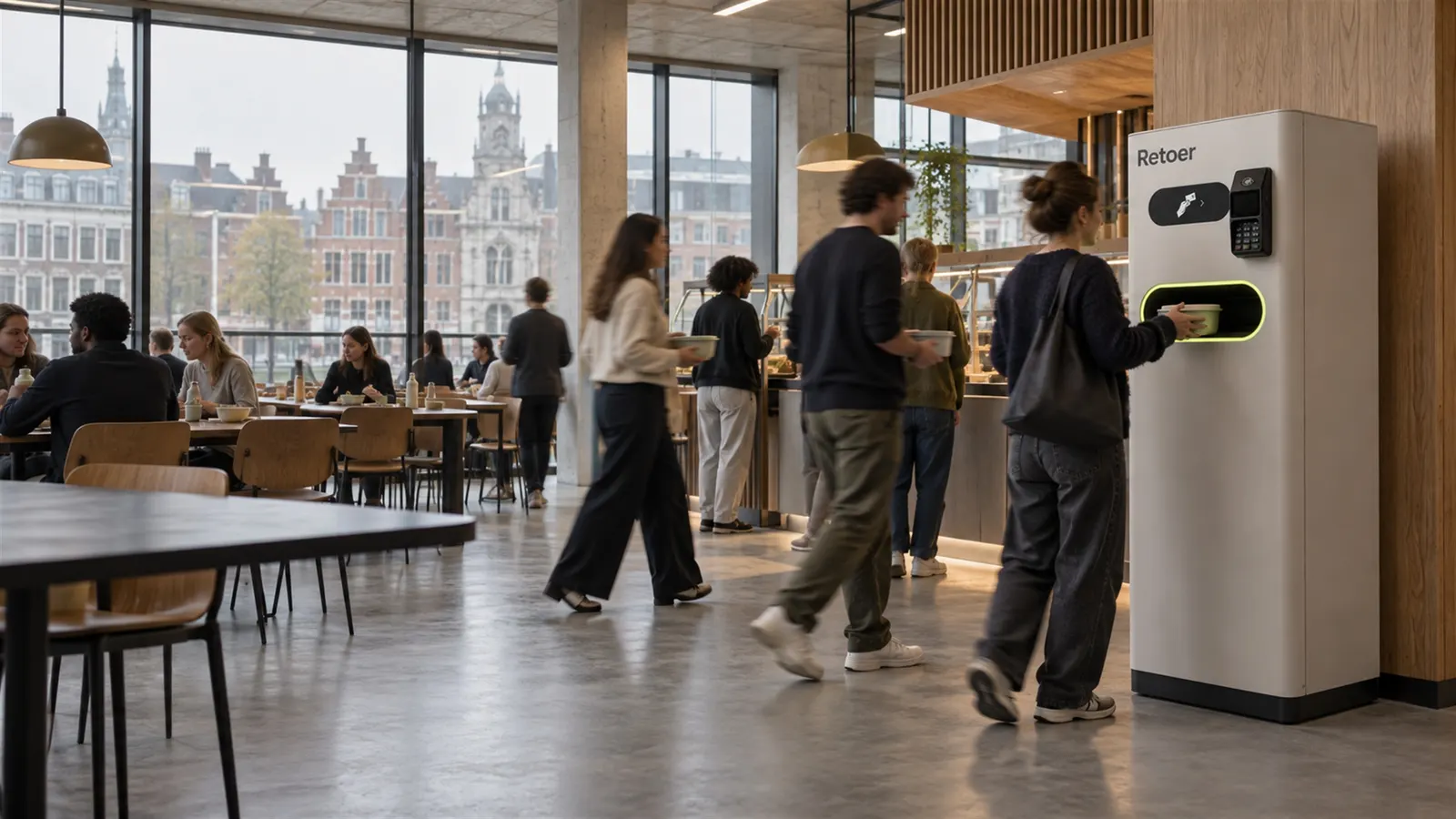
Canteens and company sites
Takeaway boxes that come back the next day.
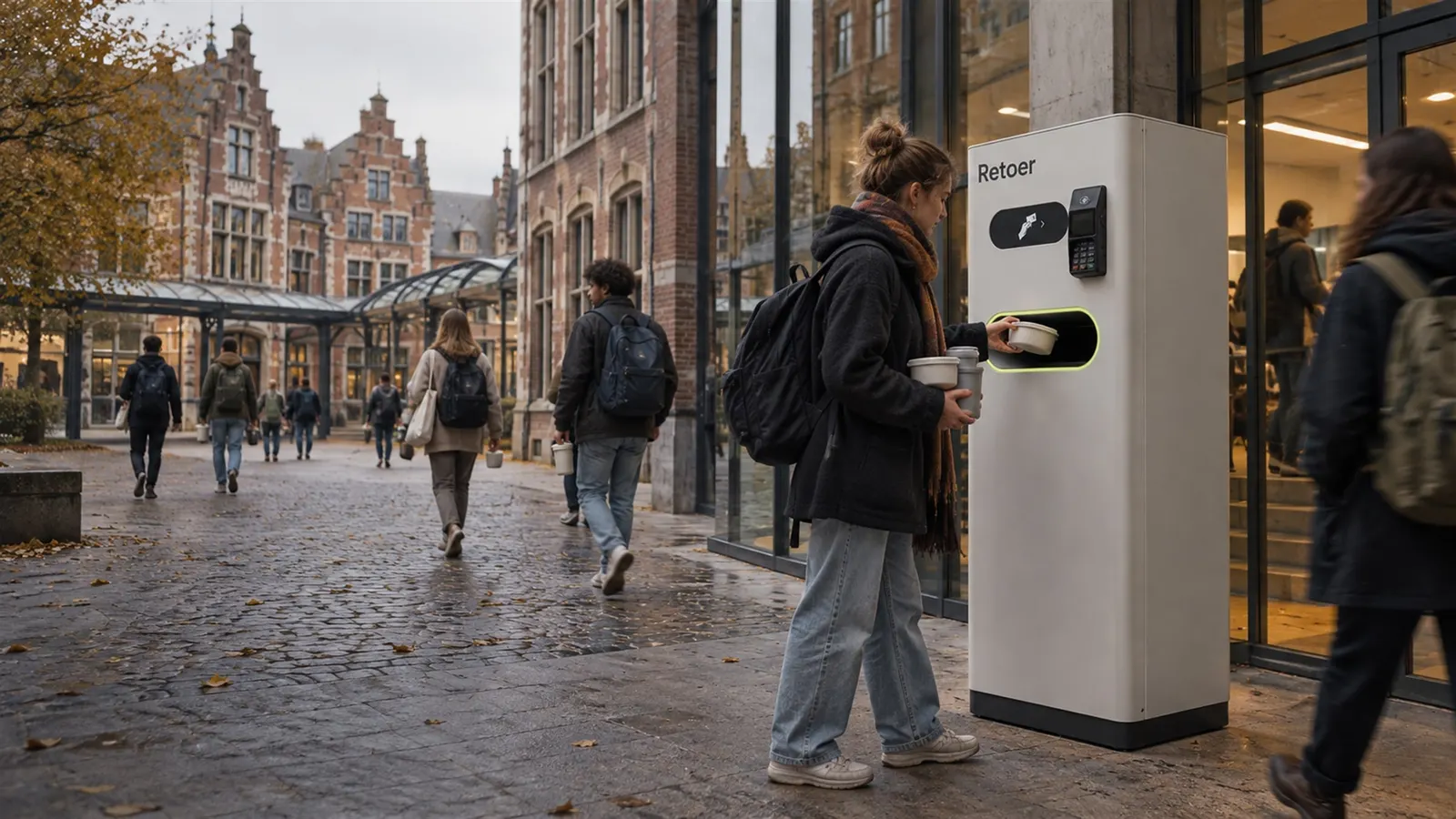
Campuses
One container for every campus café.
Festivals and events
One deposit cup at every bar.
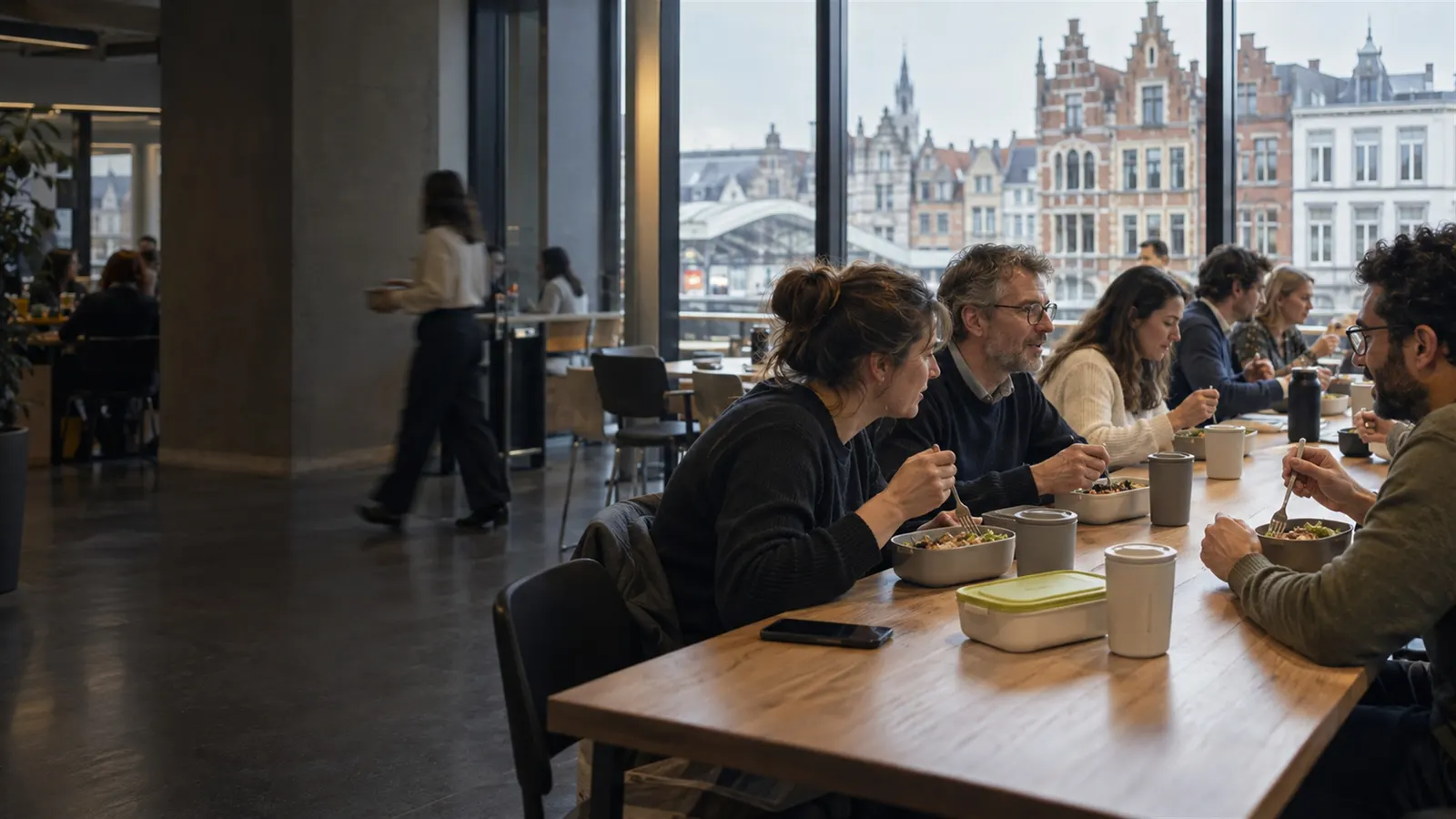
Public organizations
Reuse in your own buildings, events, and procurement.
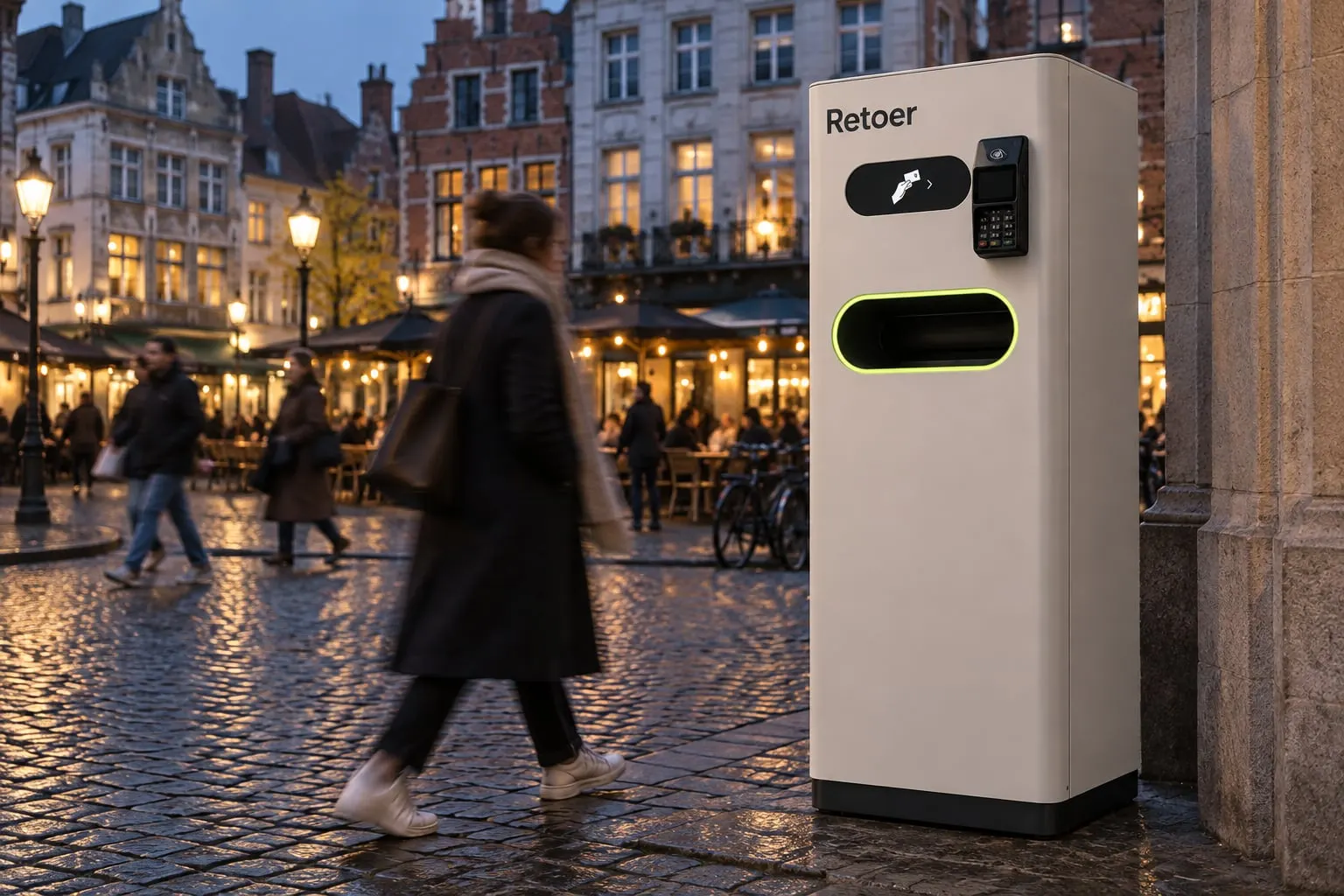
Municipalities
Return points as public infrastructure.
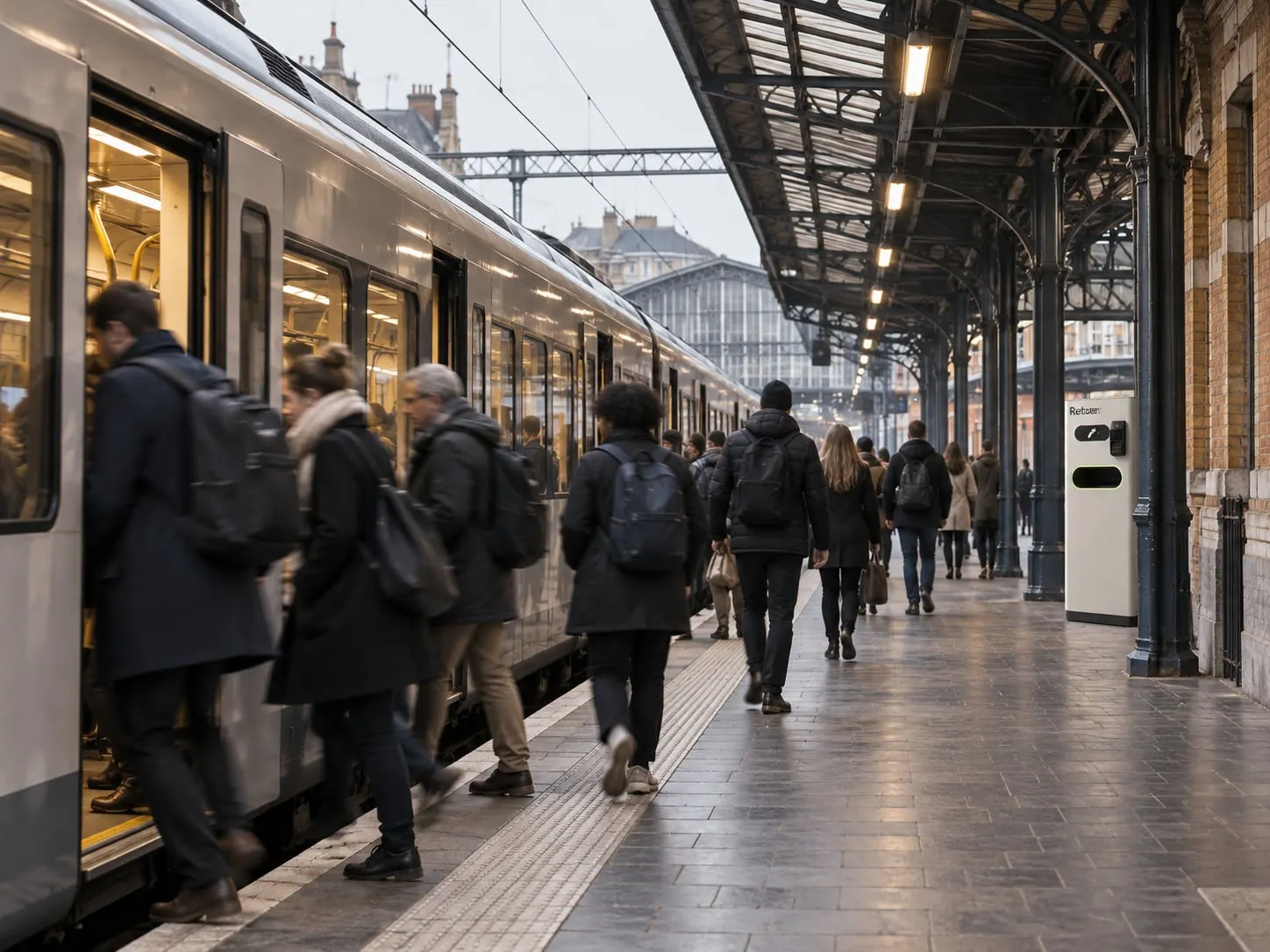
Transport hubs
Train, bus, and metro stations, and airports.
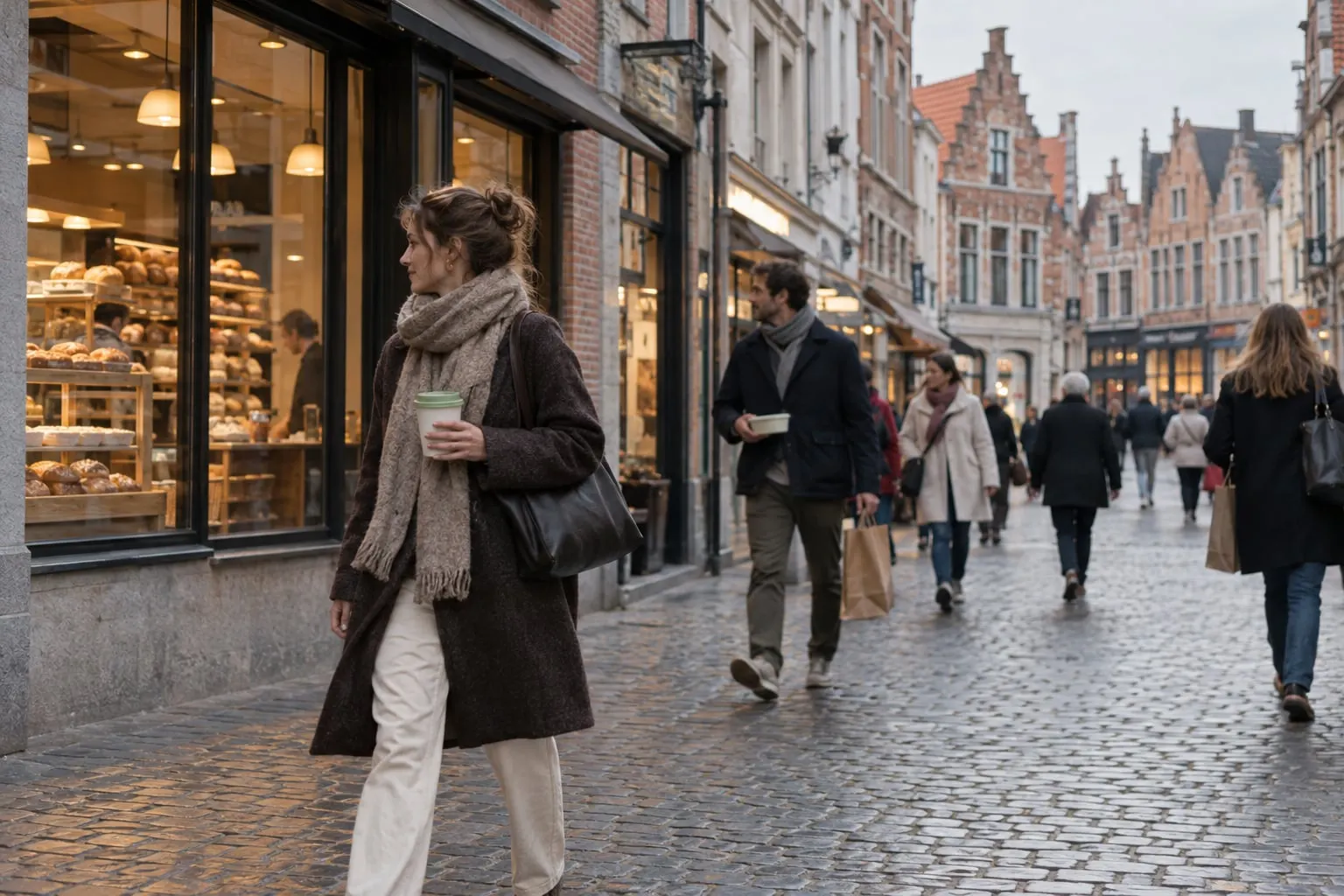
Shops and markets
Reusable jars, pots, and trays on the shelf.
What a setup looks like.
| Setting | Return | Washing | Start with |
|---|---|---|---|
| Canteens and company sites | A return machine at the exit | Your own dishwasher | One site |
| Campuses | Machines or drop boxes near the outlets | A central kitchen or a partner | Two or three outlets |
| Festivals and events | Staffed return counters | A mobile washing partner | One event, then the season |
| Public organizations | A return machine or drop box per building | Your own kitchen or a partner | A staff restaurant, building, or event |
| Municipalities | Return points in the street | A regional washing partner | A shopping street, market, or event |
| Transport hubs | Return machines on the passenger flow | A regional washing partner | One station or terminal |
| Shops and markets | A return machine in the shop, or any Retoer return point | A washing partner; the producer fills | One producer in a few shops |
We size containers and return points to your volumes during the scan.
Everything the loop needs.
Containers for your menu
Cups, bowls, and boxes from the pool, or your own with a code.
Return points that fit
A machine, a drop box, or a staffed counter.
Deposit at the till
One extra line on the receipt, refunded on return.
Washing arranged
Your own dishwasher, or a partner that collects.
Every container tracked
A QR code or RFID tag logs it at every step.
A monthly report
Return rate, losses, waste avoided, and PPWR figures.
Staff trained
Training at the start and a toolkit for the counter.
One point of contact
One team handles monitoring, maintenance, and support.
We start with a scan and a pilot.
- 1
Scan
In about two weeks we propose containers, return points, and a deposit.
- 2
Pilot
Three to six months on one site, with a report every month.
- 3
Scale
Copy the setup to your next site on the same national network.
After the pilot, you decide based on your own numbers.
Questions about getting started.
Does our IT team need to do anything?
No. The return point needs a power socket and runs on mobile data. Retoer links the deposit to your till.
Can we use the boxes we already have?
Yes. We give each container a durable code, so it is tracked like any other container in the pool.
What if we stop after the pilot?
Rented return points go back, and you keep the pilot report with your return rate and the waste you avoided.
How do you keep the cost of reuse down?
Through more rounds per container, fewer losses, and pickups and washing in full loads. The platform measures all three per site, so you see your cost per use.
Tell us where you want to start.
We plan volumes, return points, washing, and logistics with you, on the open standard that connects to the national system.