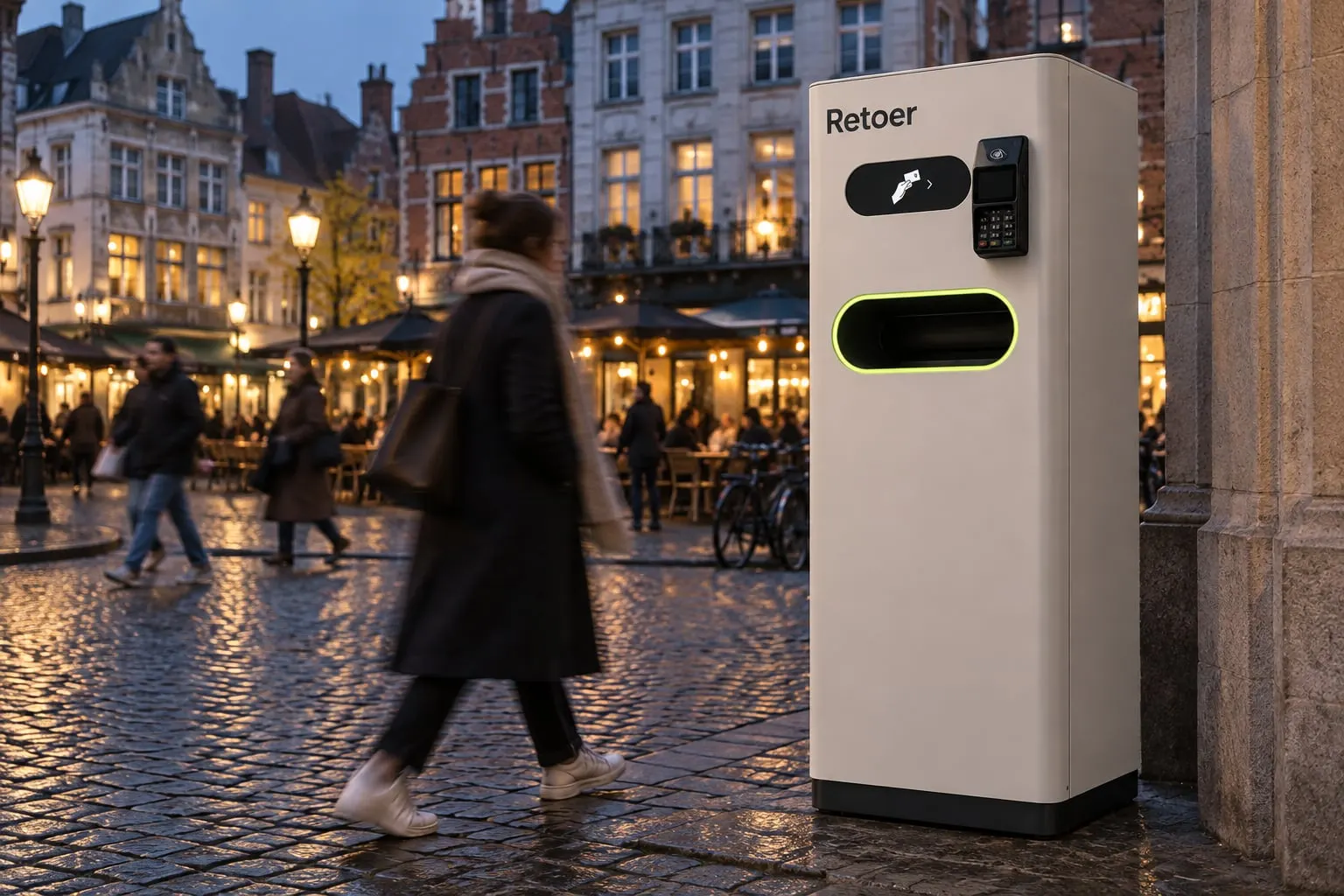
Residents learn one way to return a container, whatever the shop. Businesses, events, and initiatives join the same open system one area at a time.
What your municipality gets.
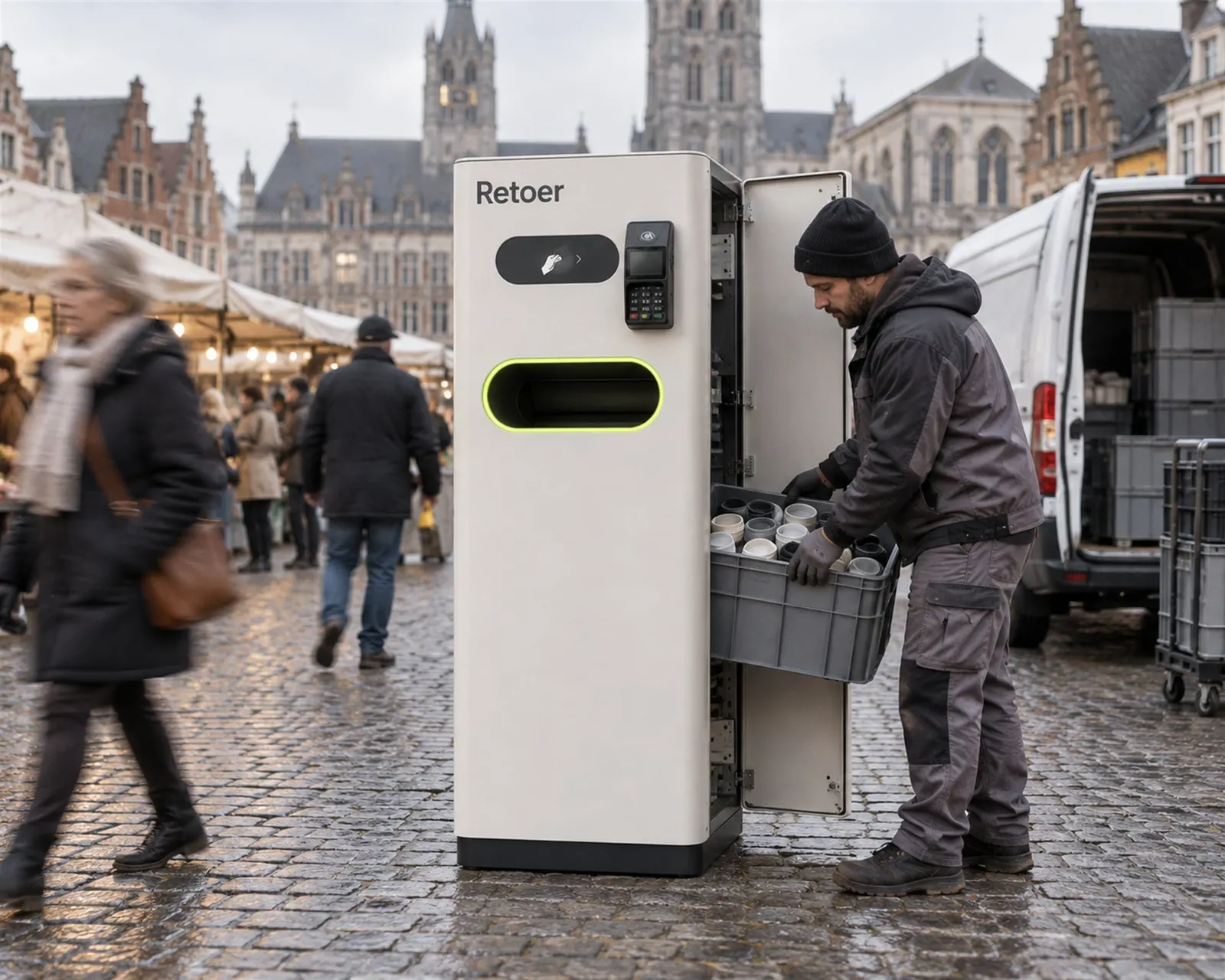
Return points in the street
Placed like public bins, with a minimum density before any rollout.
A model tender
Helps local procurement settle on one open standard, as in Denmark.
Dashboards
Track return rates, volumes, and impact for your municipality.
Neutral governance
The system keeps running if an operator stops.
How you start.
- 1
Pick a first area
A shopping street, a market, or a municipal event.
- 2
Connect local businesses
Local horeca and takeaway serve in the shared containers.
- 3
Place return points
Place them to the density standard, then grow the area.
A city-wide system brings cups back.
Cup return rate in Aarhus, Denmark, January 2024 to December 2025. The city tenders one system with bank card refunds.
Source: European CommissionMore than 1.6 million cups came back in Aarhus over the same period.
Source: European CommissionQuestions we hear.
Does our municipality have to tender?
You can start in one area first. The model tender helps local procurement settle on one open standard.
What does it cost?
Participation is designed to cost no more than single-use packaging. The money comes from deposits, per-return fees, packaging, public co-funding of return points, and pilot budgets. We work out your numbers with you.
What happens when the national system arrives?
Your setup already runs on the open standard, so it becomes part of the national system. Containers, return points, and data stay compatible.