
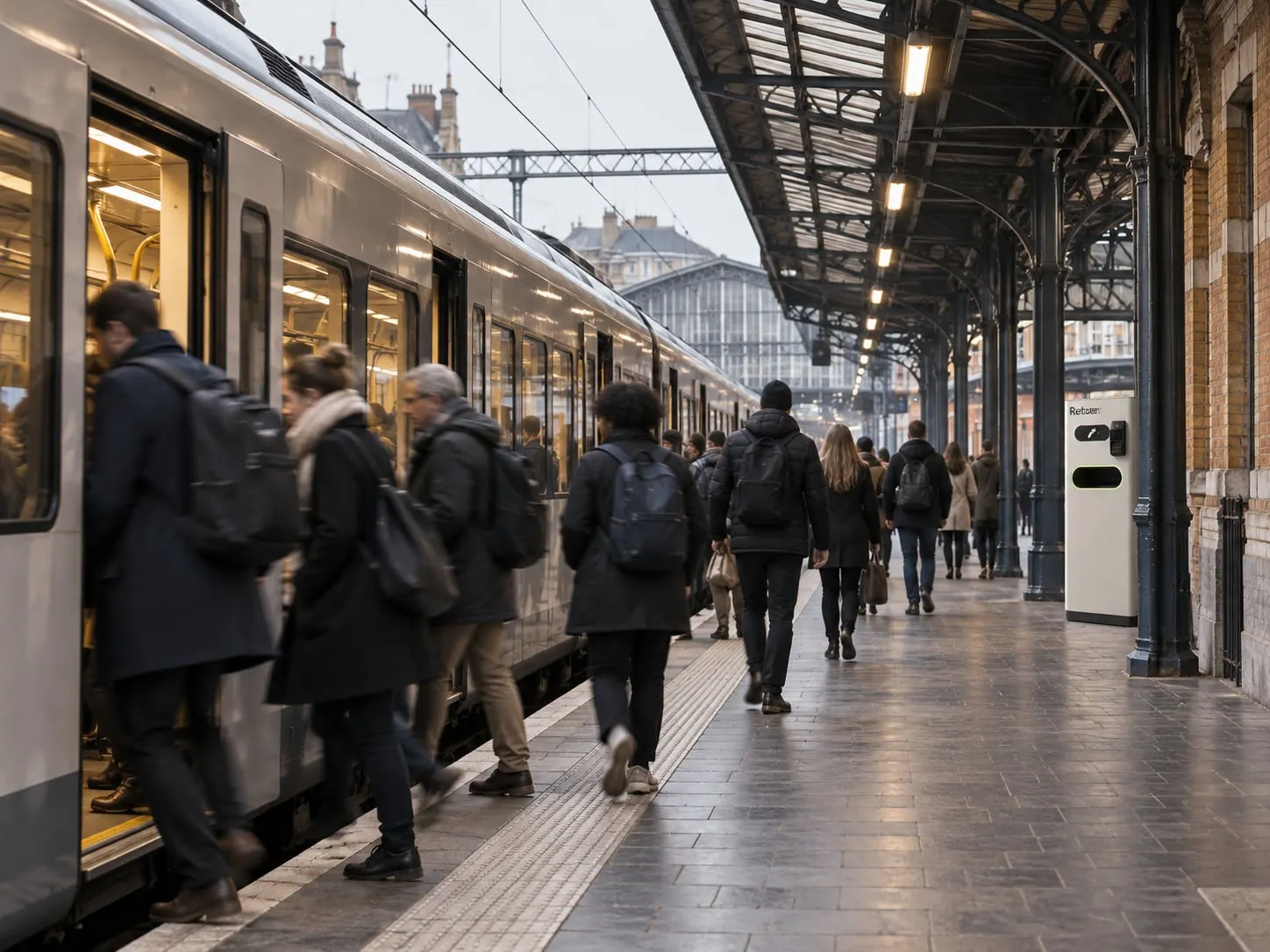
Returning a cup or box should take seconds, with no app and the deposit back on a bank card. Retoer tests this in busy stations.
Where it fits.
Train stations
Return machines near the platforms and food outlets.
Bus and metro stations
A return point where people change lines.
Airports
Return points in the terminal, close to where people buy food and drinks.
Built for passenger flow.
Under 30 seconds
What a return should take, without an app.
Machines from any supplier
Return machines from different suppliers connect through one open integration layer.
From hub to hub
A container bought at one station can come back at another, or in your own town.
Live fill levels
The platform sees fill levels and plans pickups.
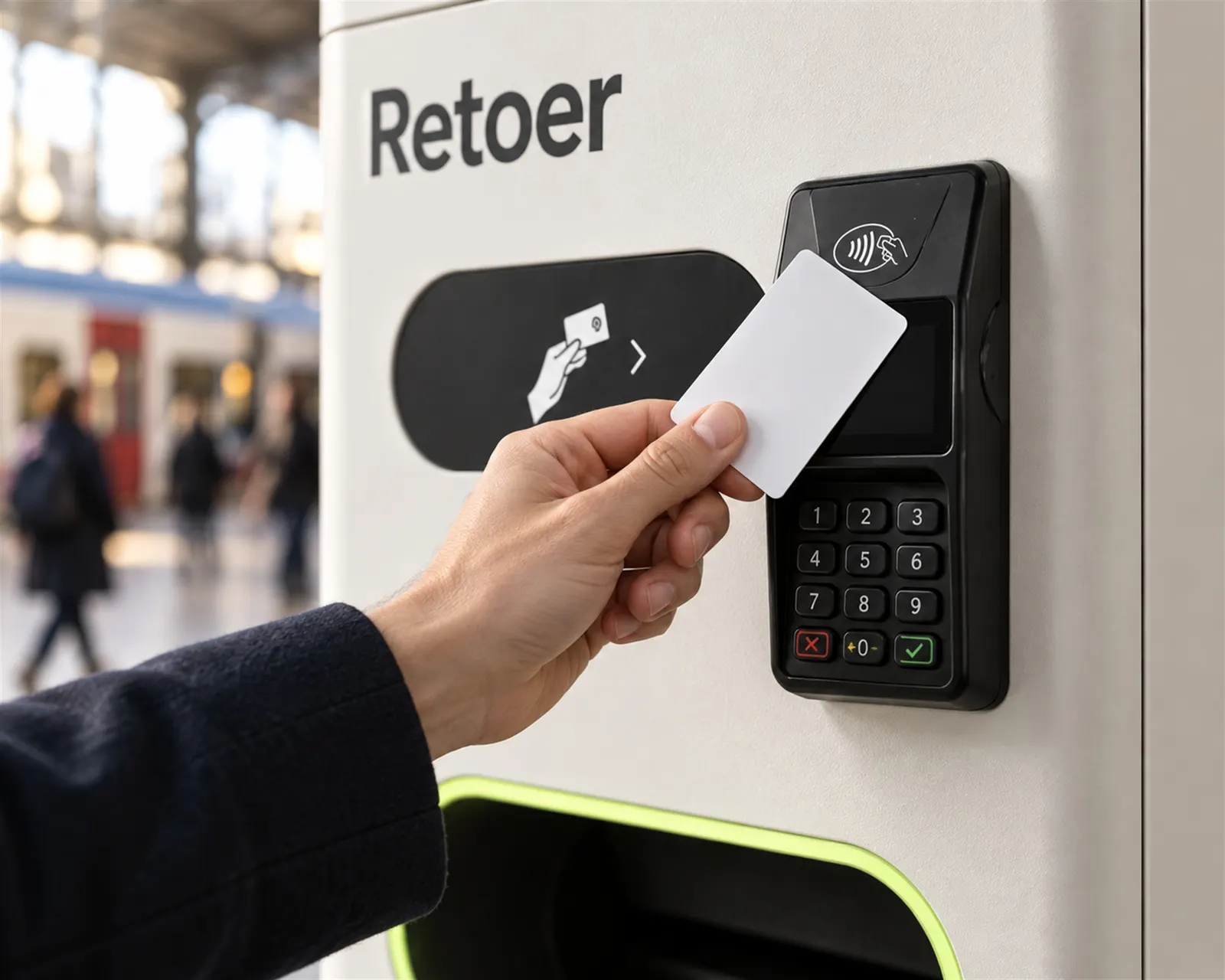
From counter to bank card.
- 1
Buy
Pay a small deposit with your drink or meal.
- 2
Return
Use a return machine in the station or terminal, or anywhere else on the network.
- 3
Get it back
The deposit goes back on your bank card.
Questions we hear.
Do travelers need an app?
No. The aim is a return in under 30 seconds without an app, with the deposit refunded to a bank card. Pilots test how the final flow works for travelers.
Who joins at a hub?
The station or airport operator and the food and drink outlets inside. Every outlet sells in the same containers and uses the same return points.
Who places the return points?
We plan them with the site operator and, where it applies, the municipality, following a minimum density standard.
Does Retoer work at airports?
Retoer tests the system in high-traffic zones such as train stations. Thomas More, which develops Retoer with us, brings research from its rePACE 2.0 project. That project combines sustainable tourism and reusable packaging in settings such as stations and airports.
What happens when the national system arrives?
Your setup already runs on the open standard, so it becomes part of the national system. Containers, return points, and data stay compatible.