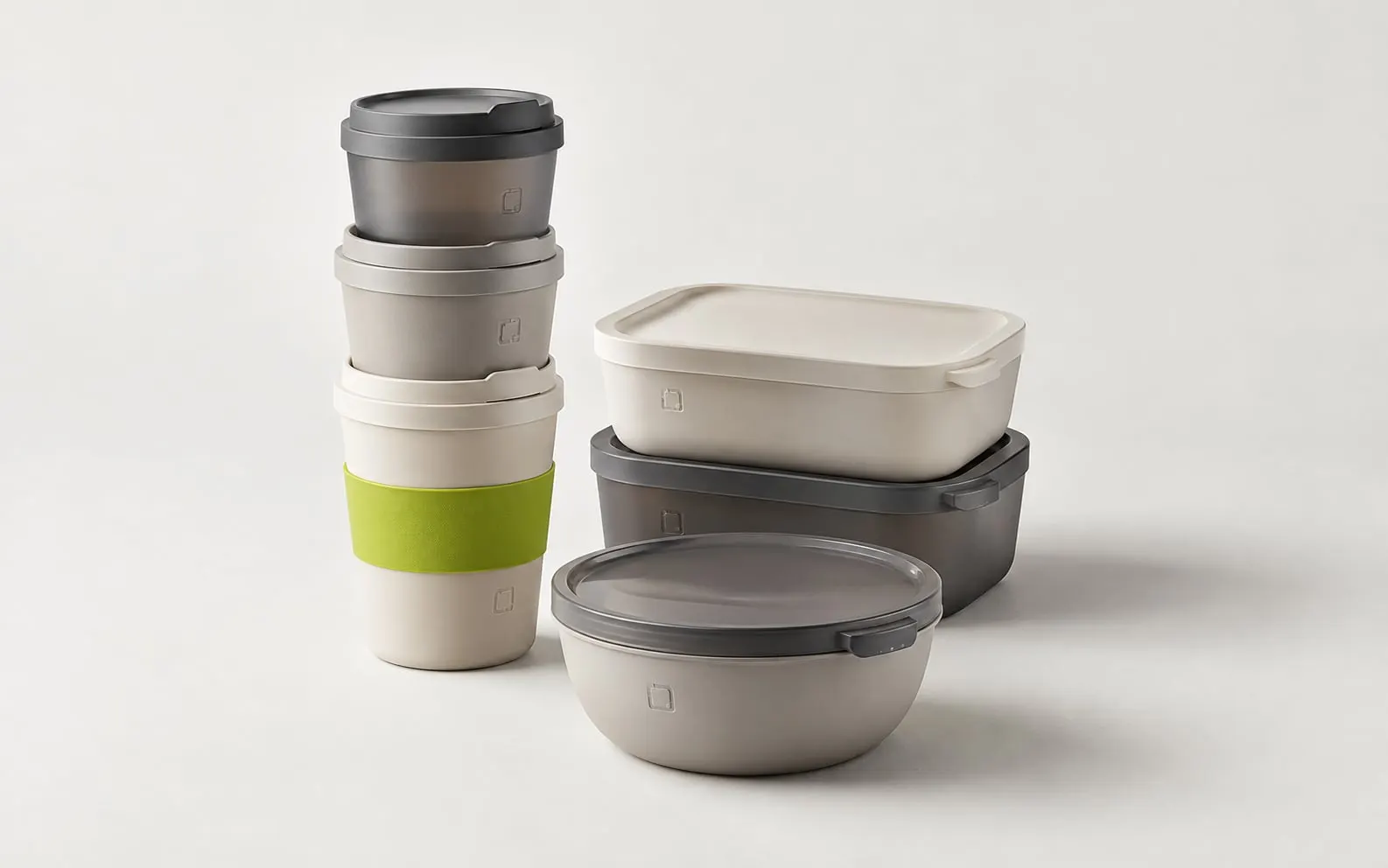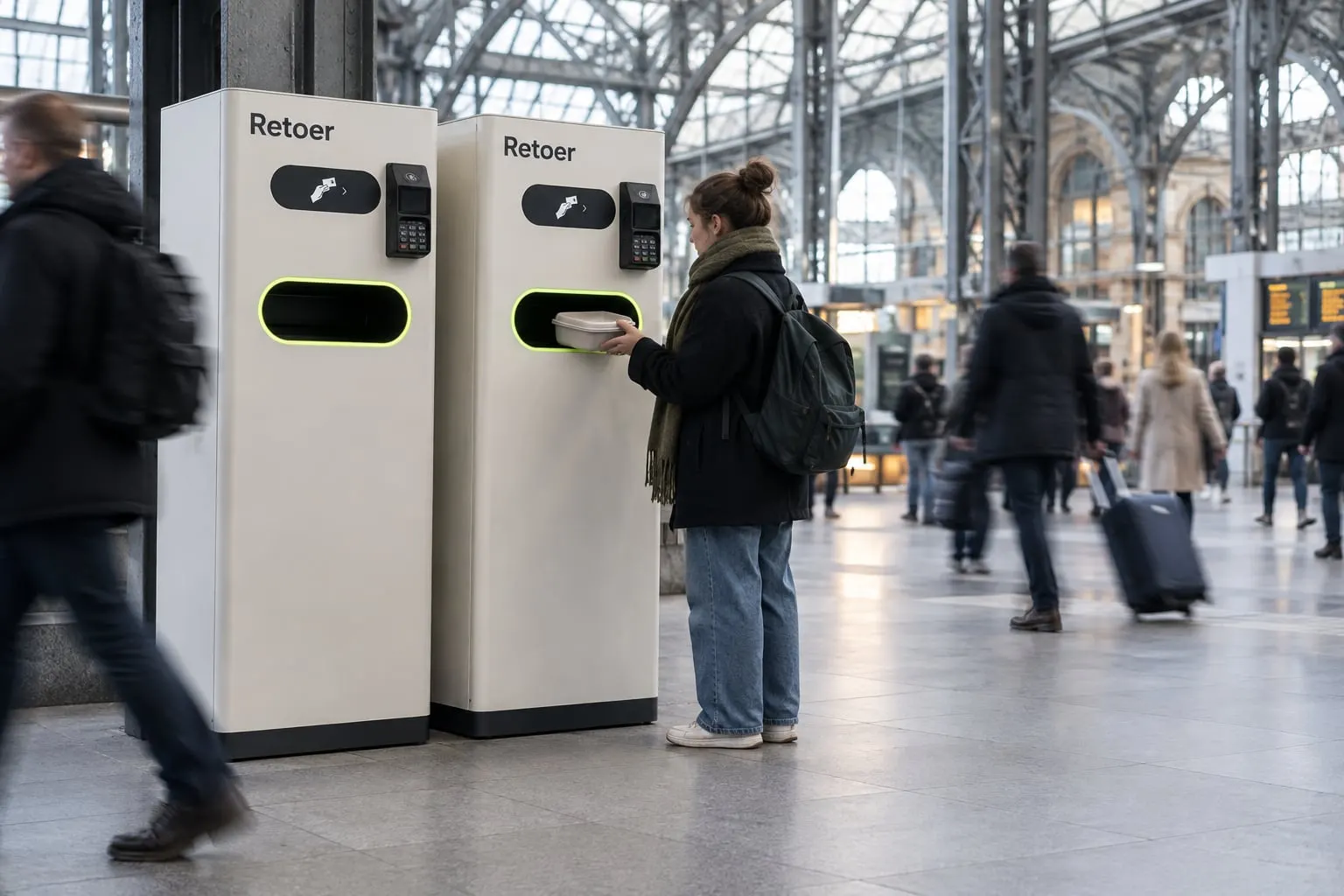

In a deposit model, the customer pays a small refundable amount with the meal or drink and gets it back on return. In a library model, the customer borrows the container without a fixed deposit. The difference decides what a system needs behind the counter: a library model only works when every container has its own code and the customer pays by card, not cash. Retoer uses a prepaid deposit.
What is the difference between a deposit and a library model?
| Deposit model | Library model | |
|---|---|---|
| Paid up front | A small deposit | No fixed deposit |
| On return | The deposit goes back to the customer | Nothing to refund |
| Containers | Each has its own code for tracking | Each must have its own code |
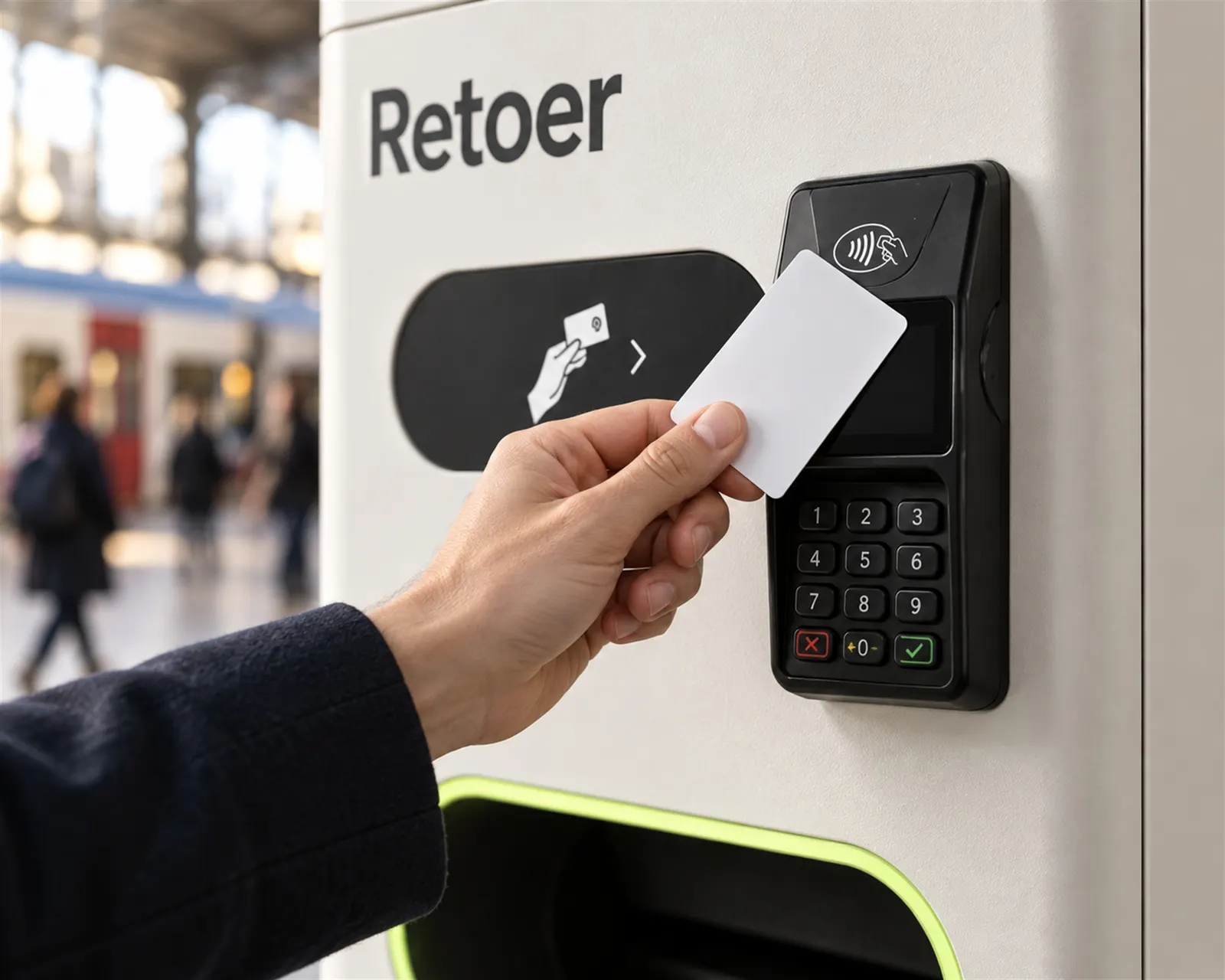
| Payment | Refund to a bank card, by digital transfer, or as a voucher code | Card payment only, not cash |
Both aim at the same thing: containers that come back, get washed, and are used again. They differ in what makes a person bring the container back.
How does a deposit model work?
The customer pays the deposit at the till. They return the container at a return point and get the money back. The incentive is simple and visible: the deposit is theirs to reclaim.
Behind that, someone has to hold the deposits and settle them between businesses, return points, and operators. In Retoer’s design, a deposit ledger registers each deposit per container and clears balances, and the deposits sit with a neutral administrator, not with an operator. If an operator stops, the deposits stay safe. Our post on who owns the deposits when a reuse operator stops goes into this.
How does a library model work?
The customer borrows the container, much like a book. No fixed amount is charged up front, so nothing is refunded on return. The system instead has to know who took which container, and what to do when one doesn’t come back.
What does a library model need?
Two things follow from not charging a deposit:
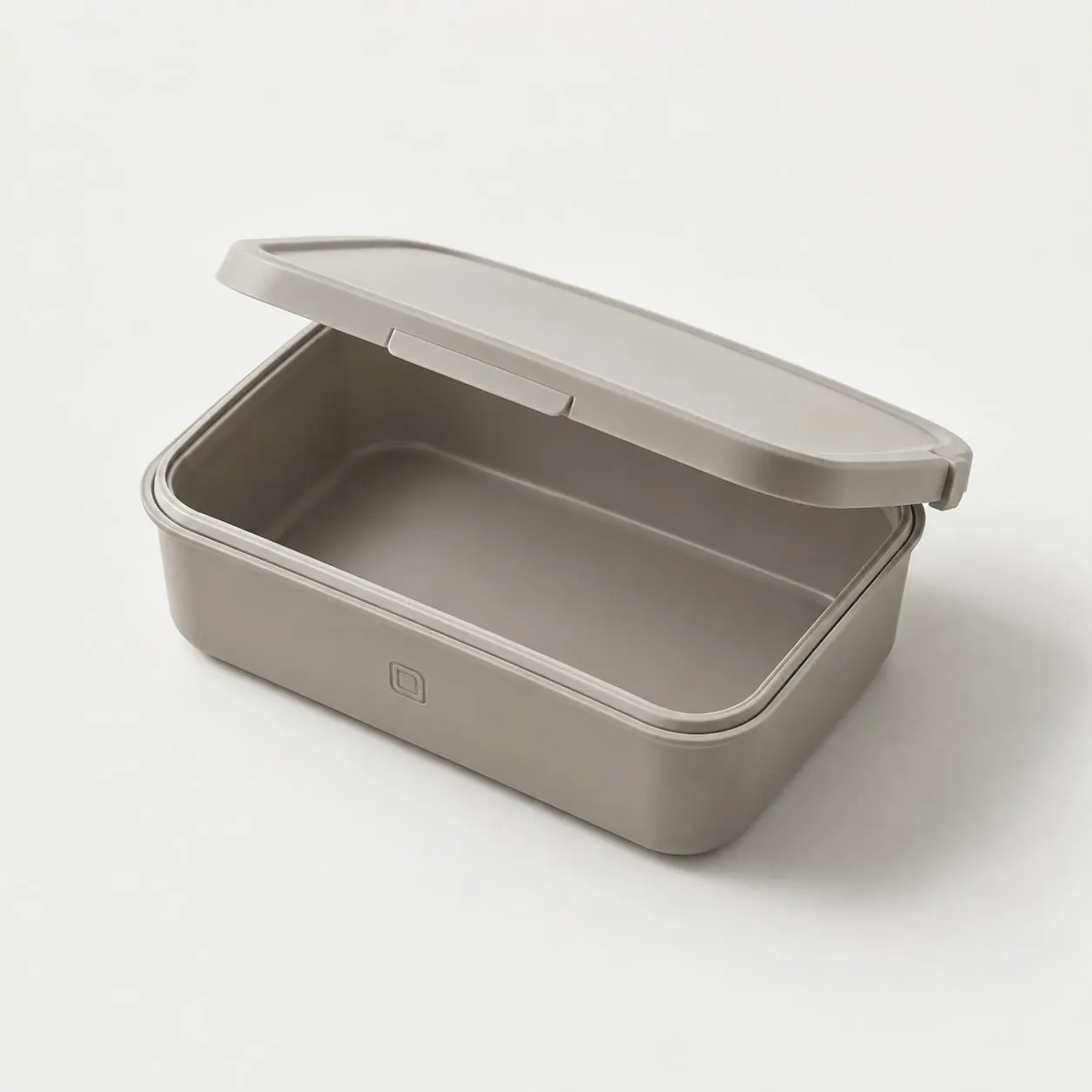
- Serialized containers. Every container carries its own code, so the system can link it to a customer.
- Card payments only. The system must be able to identify the customer, and cash can’t do that. A library model therefore rules itself out wherever cash is still common.
A deposit model also benefits from serialized containers, but it doesn’t depend on knowing the customer.
Which model do most reuse systems use?
Most use a deposit. According to Zero Waste Europe’s European Reuse Barometer, 81% of the 90 reuse solutions it analysed use an upfront deposit. The barometer does not link the deposit to a system’s success, so the figure shows how common the model is, not that it works better.
Why does Retoer use a prepaid deposit?
Retoer’s second design principle is a prepaid deposit: noticeable but low, and the same across the whole system. It gives the person a clear reason to return the container.
The refund stays app-free. Depending on the setup, it goes to a bank card, by digital transfer, or as a QR code or barcode voucher for the next purchase. The target is under 30 seconds, and the pilots test which method fits each setting. Our post on why returning a container has to work without an app explains why.
What to ask before choosing a model
For an initiative, a city, or an operator weighing the two:
- Can every container carry its own code, and can the system read it at each return?
- Do your customers pay by card only, or does cash still matter?
- Who holds the money or the data, and what happens if that party stops?
- Which model would customers understand without an explanation?
Retoer is an open infrastructure for reusable packaging with deposit in Belgium, developed with Thomas More University of Applied Sciences. Rotion is the first technology provider helping to launch it, and other providers can join on the same open standard. Existing initiatives can plug into shared return points, washing, and logistics, and keep their brand and customers. See what Retoer offers existing reuse initiatives, or read how the system works.
If you run a reuse initiative and use one of these models, we would like to compare notes. Get in touch with the Retoer team.