
A reuse system works at national scale when it passes seven tests: the return needs no app, the deposit is prepaid and the same everywhere, there is one neutral pool of packaging, return points are dense before rollout, reuse costs a business no more than single-use, a neutral administrator holds the data and the deposits, and policy supports all of it. Retoer calls these its design principles. They come from systems that worked and systems that failed, and they are the test every design choice has to pass.
What does a reuse system have to get right?
Systems that work share three traits, according to the international evidence Retoer has collected: a neutral coordinator that manages the standard, a standardized packaging pool, and a frictionless return with a dense network of return points. Systems that fail share the opposite: voluntary participation without a price incentive, fragmented and incompatible schemes, and friction through apps and registration.
The seven rules turn those traits into questions you can ask of any scheme, including Retoer’s. They describe targets the design has to meet, not a product that is live today.
Rule 1: The return needs no app
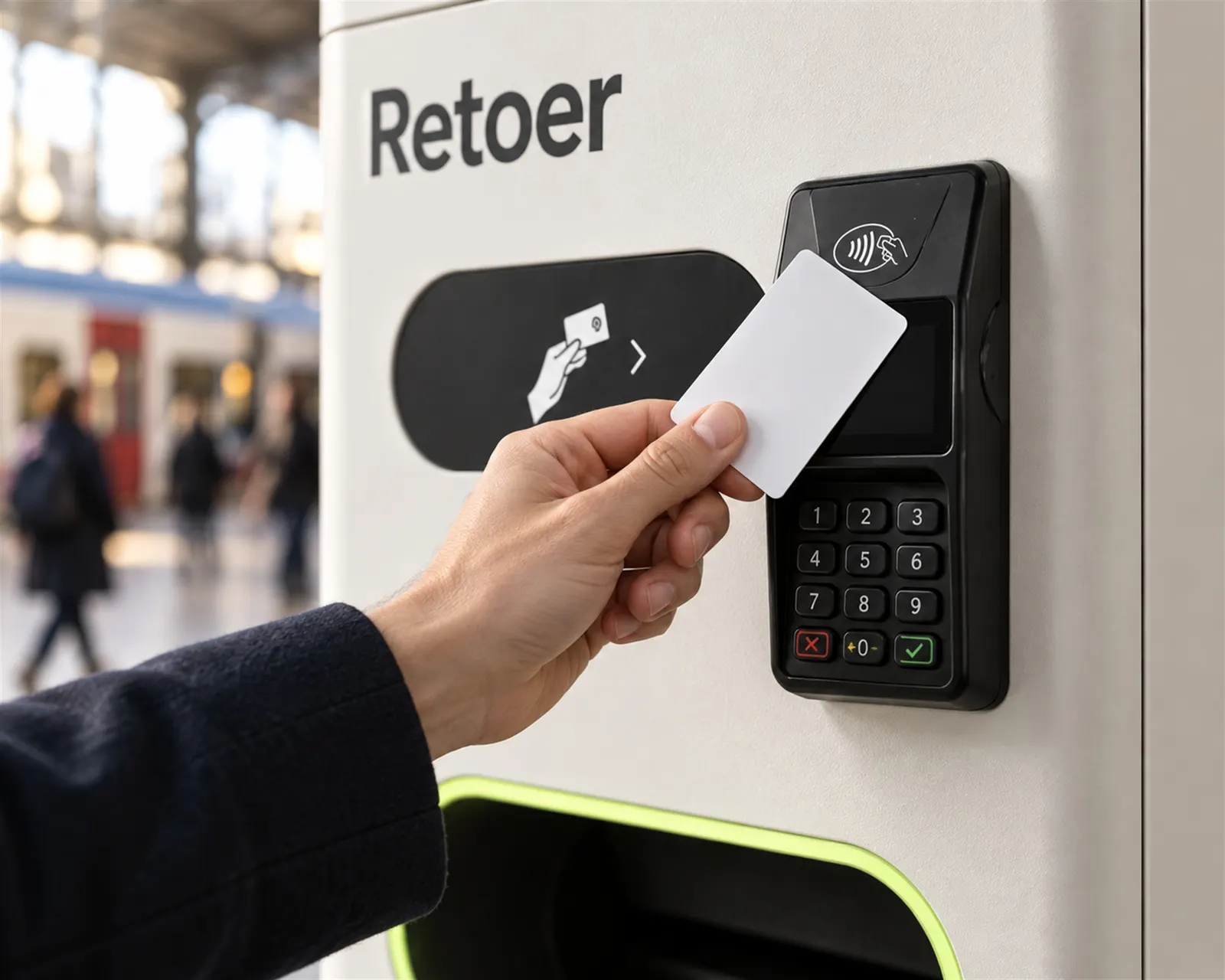
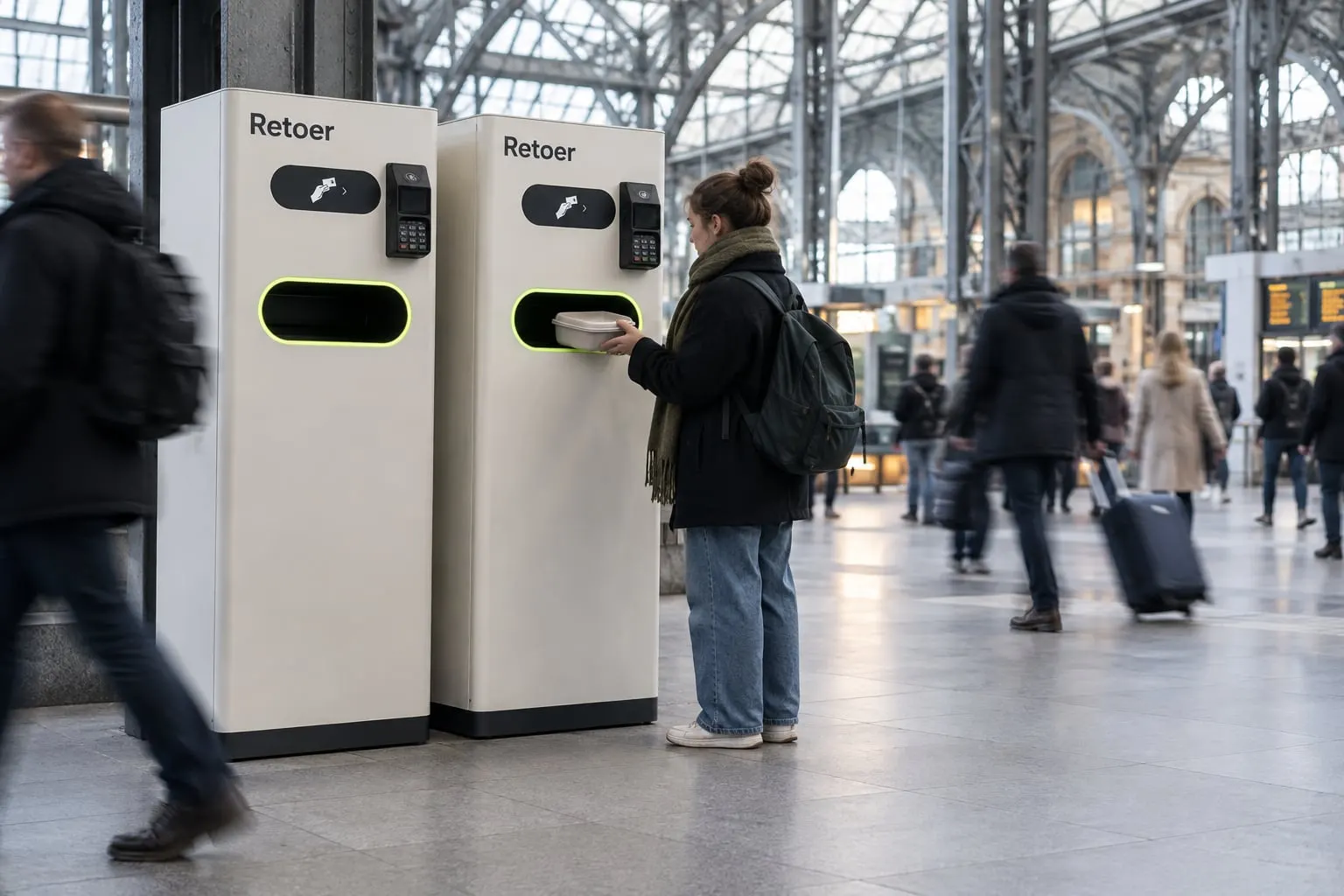
Tap a bank card, done in 30 seconds. That is Retoer’s target. The return is the moment with the least patience in the whole loop, so every extra step costs containers.
Kooky, a Swiss scheme with an app, QR codes, and special return boxes, left SBB stations in July 2024 and then closed down, according to Blick. A closure has many causes, and this post does not claim the app was the one. Aarhus refunds to the bank card and reached a 91% return rate, with more than 1.6 million cups returned from January 2024 to December 2025, according to the European Commission. The longer argument is in why returning a container has to work without an app.
Ask of any scheme: can a stranger return a container on the first day, with no account?
Rule 2: The deposit is prepaid and the same everywhere
The deposit is noticeable but low, and the same across the whole system. It is what brings the container back, and a deposit that differs by shop or by operator makes it hard to explain at the counter.
The Reuse Barometer, published by Zero Waste Europe and partners, found that 81% of the 90 cases it analysed use an upfront deposit. The Barometer does not link that to success, so read it as common practice, not proof.
Ask of any scheme: is the deposit paid up front, and does it stay the same wherever the container is returned?
Rule 3: One neutral standard pool
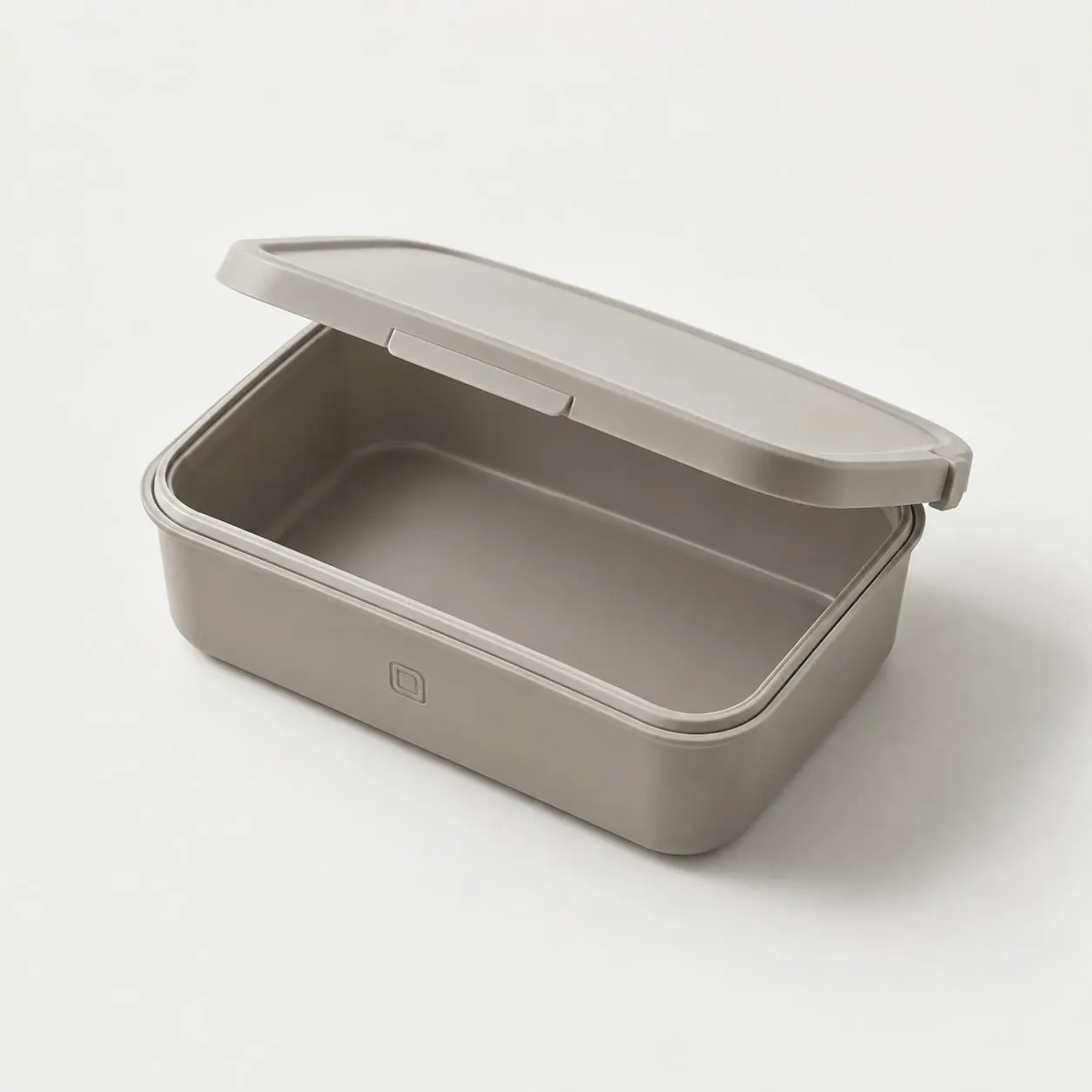
All businesses draw from one pool of standard packaging. Branded packaging stays possible on the same network as a premium option, because separate sorting costs more.
Aarhus tendered one system with one standard cup. The most-used cups made 33 loops in the first year, according to TOMRA. The pool does not have to belong to one owner: food chains, public bodies, and manufacturers that rent out packaging can each own part, under the same rules.
Ask of any scheme: does a container from one business go back into the same loop as everyone else’s?
Rule 4: Enough return points before rollout
A minimum density of return points is a hard criterion before rollout in any area. Containers come back when returning is on the way.
Copenhagen had 34 return stations in the city center by November 2025, according to the City of Copenhagen. Nobody has yet published a proven number of return points per area, and Retoer does not claim one. Retoer studies the figures with Thomas More University of Applied Sciences. Our post on how many return points a system needs goes through what is known.
Ask of any scheme: what density must be in place before containers go out?
Rule 5: No extra cost for the business, no higher price for the consumer
Participation is designed to cost a business no more than single-use, and reuse never looks more expensive at the counter. If it does, the customer picks the cheaper option and the system stalls.
Germany shows the pressure from the other side. Since 1 January 2023, businesses there must offer a reusable option that costs no more than single-use, but the reuse share rose only from 0.7% in 2022 to 1.6% in 2023, while single-use takeaway packaging grew from about 13.6 to 14.6 billion units, according to WWF Germany. Price parity on paper is not enough without an easy return. We cover this in why Germany’s reuse obligation reached 1.6%. Costs also differ by product: in its cost-benefit analysis, the Flemish waste agency OVAM finds that replacing bagasse or lined cardboard trays is budget-neutral or saves money, while some formats cost more.
Ask of any scheme: who pays the difference, and where does it show up at the counter?
Rule 6: A neutral administrator holds the data and the deposits
Data and deposits sit with a neutral administrator, never with an operator. Operators compete on service, such as washing, logistics, and customer experience. The standard is shared.
The reason is practical: if an operator stops, the deposits people paid must not disappear with it. Our post on who owns the deposits when a reuse operator stops explains the mechanism.
Ask of any scheme: where do the deposits and the data sit if the operator stops?
Rule 7: Policy helps
Reuse needs a model tender for cities and a price incentive on single-use packaging. A rule on its own does not move volume.
Lisbon banned single-use plastic cups in a municipal rule and launched a city-wide reusable cup system in June 2025, the first in an EU capital, according to EU Transition Pathways. The Netherlands combines a surcharge on single-use with an on-site ban and aims for 40% fewer single-use cups and containers in 2026 than in 2022, according to Mondaq. That is a target, not a result. Germany has no levy, and the Deutsche Umwelthilfe found in 180 test visits that staff never offered the reusable option unprompted, as reported by Lebensmittel Praxis.
Ask of any scheme: which policy tools does it rely on, and are they in place?
How can you use the seven rules?
Score a scheme on each rule with yes, partly, or no, and write down the evidence. A scheme that fails one rule can still run, but it carries that risk into every city it joins. This applies to Retoer too: the rules are the test, and the pilots show whether the design passes.
Retoer is an open infrastructure for reusable packaging with deposit in Belgium, developed with Thomas More University of Applied Sciences. Rotion is the first technology provider helping to launch it, and other providers can join on the same open standard. Read more about Retoer or see how it works. If you run or plan a reuse scheme and want to test it against the seven rules, get in touch with the Retoer team.