

Reusable packaging in Belgium stalls because the effort is split. Belgium and Flanders have many good reuse initiatives, and most of them build the whole chain on their own: an app, the packaging, logistics, a washing partner, and their own customers. Each one stays below the volume it needs to survive. What changes that is one shared system that initiatives, restaurants, and cities all connect to, so the containers, the returns, and the volume end up in the same place.
Every reuse initiative builds its own chain
A reusable cup or bowl scheme needs a lot before the first container comes back. It needs containers and a way to identify them, a deposit that someone collects and pays back, a washing partner, transport, places to return, businesses that serve in the containers, and customers who bring them back.
In Belgium, most initiatives organize all of this themselves. Each one carries the full cost of a complete chain on its own volume, and that volume stays too small. A second initiative in the next town builds a second chain, with containers that don’t fit the first one’s return points.
Thomas More University of Applied Sciences and its partners looked at earlier projects and reached a clear conclusion: the barriers are systemic, and another pilot doesn’t remove them.
Why doesn’t reusable packaging in Belgium reach scale?
Because the volume is spread over many separate chains. Each initiative runs its own app, containers, washing, and logistics, so none of them handles enough containers to stay viable. Consumers meet systems that don’t accept each other’s packaging, and when an operator stops, its pool and deposits stop with it.
What fragmentation looks like on the street
Germany shows what happens when every operator runs its own system. Several incompatible reuse systems operate on the same street, and consumers have to remember which container goes where. Since 1 January 2023, German take-away businesses have had to offer a reusable option. According to WWF Germany, the reuse share rose from 0.7% in 2022 to 1.6% in 2023.
Friction adds to the problem. An app to download, an account to register, or a special drop box each lowers the return rate in public space.
When the operator stops, the system stops
App-based operators across Europe struggle. The Swiss operator Kooky shut down, as Blick reported.
When the operator owns the packaging pool, the data, and the deposits, a bankruptcy takes all three with it. Consumers lose trust, and businesses lose the system they built their service around. We look at this risk in more detail in who owns the deposits.
What a shared system changes: four layers
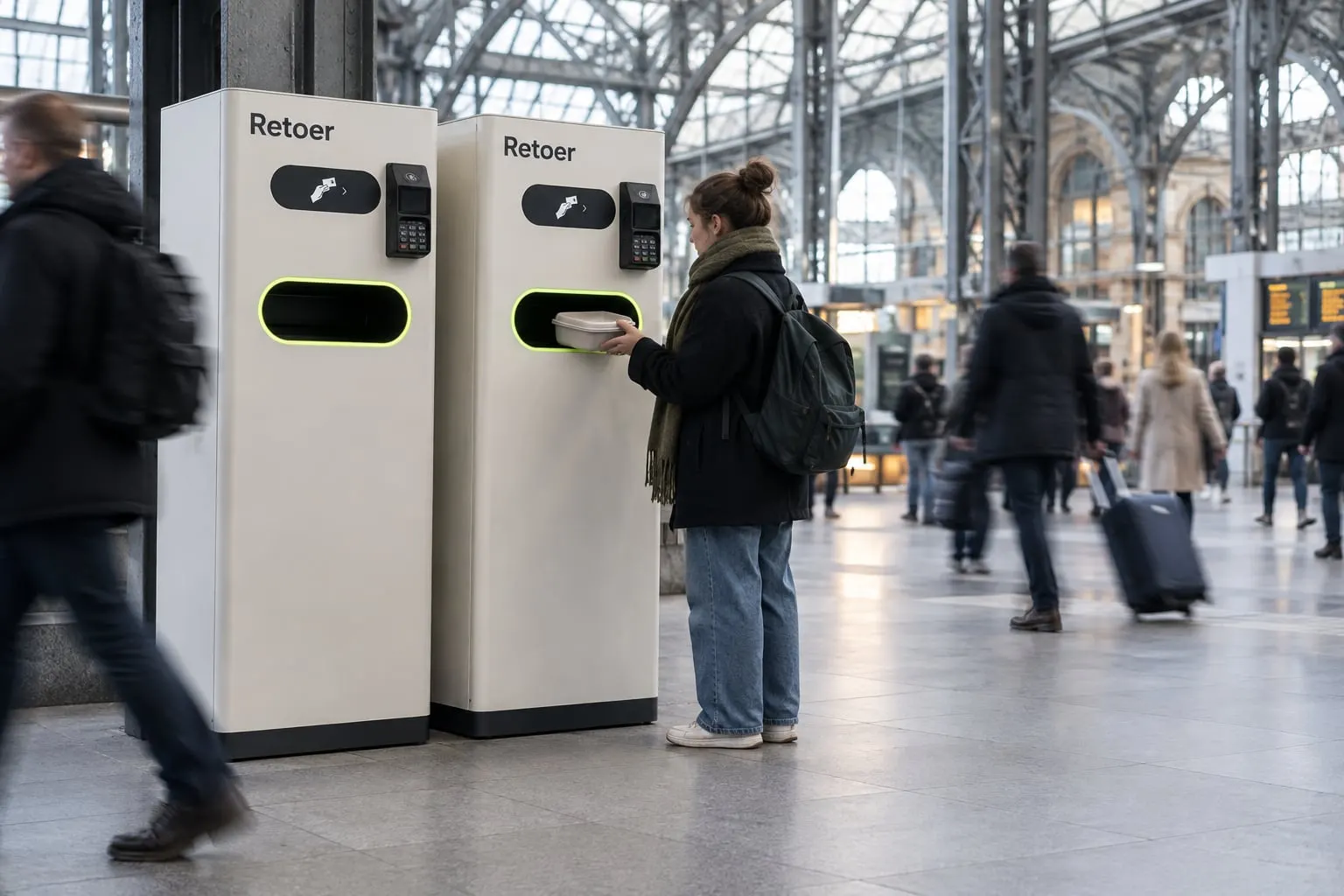
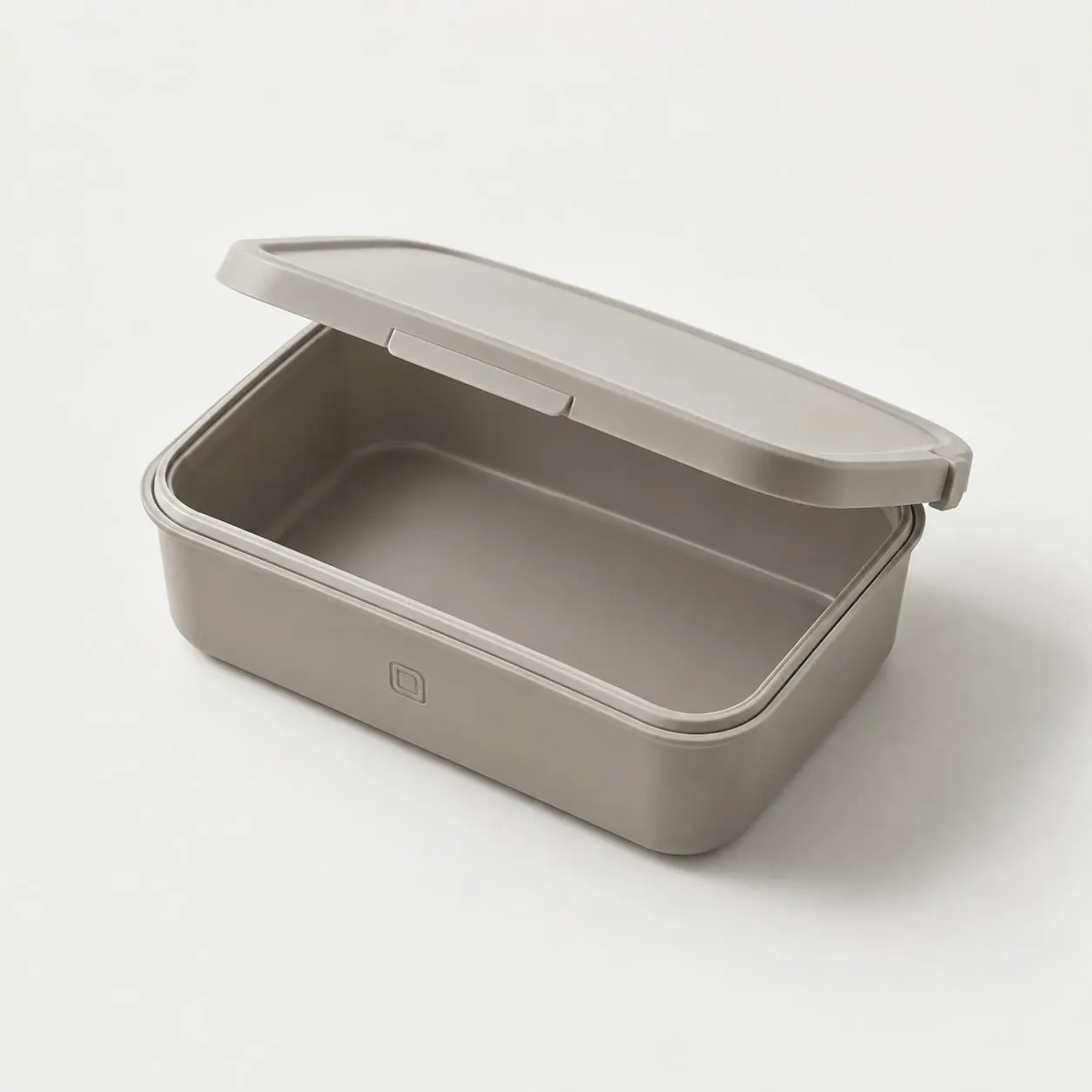
Retoer is the open, shared infrastructure for reusable packaging with deposit in Belgium. Any reusable cup, bowl, or box goes back at any return point, gets washed by any connected partner, and comes back into circulation, regardless of who issued it. The system has four layers, and everyone connects to the same ones.
Governance
A neutral administrator manages the standard, the packaging pool, the data, and the deposits. Clear rules say who can join and how. Because none of this sits with an operator, the system outlives any single operator, including Retoer as its initiator.
Open standard
The standard sets the packaging formats, GS1-based identification, deposit rules, the data model, certification, and hygiene and food-safety rules. It also covers when packaging is neutral and when it carries a brand. A producer certifies packaging once and can sell it to every connected business.
Digital platform
The platform registers each container and its status. It keeps a deposit ledger with clearing between parties, connects to return machines and kiosks, and matches return points with washing and logistics capacity. Businesses and cities get dashboards, the platform supports PPWR reporting, and an open API lets existing systems connect.
Physical chain
Return points are placed to a minimum density standard. Washing happens in connected facilities, often social-economy companies. Hubs and pickup routes move the containers, and a shared packaging pool keeps them in circulation.
Operators compete on service, never on the standard. An existing initiative keeps its brand and its customers and shares the return points, washing, and logistics. Retoer doesn’t run a reuse brand of its own for the same reason: existing initiatives are meant to connect to it.
What the evidence shows
Reuse systems that work share three traits: a neutral coordinator that manages the standard, a standardized packaging pool, and a quick return with a dense network of return points. Aarhus in Denmark tenders one system for the whole city. According to the European Commission, more than 1.6 million cups came back there between January 2024 and December 2025, with a 91% return rate. We describe how in how Aarhus returns its reusable cups.
Germany sits at the other end: voluntary participation, many incompatible systems, and a reuse share of 1.6%. Retoer builds on that comparison: an open infrastructure with a neutral administrator is the model that separates a 91% return rate in Aarhus from a 1.6% reuse share in Germany.
Regulation makes the choice more urgent. Under the EU Packaging and Packaging Waste Regulation, take-away businesses must offer a reusable option from 12 February 2028, according to Compliance Gate. Each business then faces the same question: how do you organize return flows at scale without building your own system?
Where Retoer stands today
Retoer is developed with Thomas More University of Applied Sciences. Rotion is the first technology provider helping to launch it, and other providers can join on the same open standard. Retoer tests the system in municipalities of different sizes and in high-traffic zones. Participation is designed to cost a business no more than single-use packaging. The goal is a blueprint: an implementable system that any region can roll out. Read more about the people and the approach on the about page.
If you run a reuse initiative, work for a city or municipality, or shape policy, you can help build the shared system from the start. See how to take part and join the working group.