
When a company runs a reuse system on its own, it usually holds three things: the containers in circulation, the data on where they are, and the deposit money consumers paid. If that company goes bankrupt, all three are tied to its fate, and consumers stop trusting reuse. Good reuse system governance puts the pool, the data, and the deposits with a neutral administrator, outside any operator, so the system keeps running when an operator stops. Retoer, the open infrastructure for reusable packaging with deposit in Belgium, is built that way.
Why deposits are the weak point in reuse system governance
A deposit is money a consumer hands over on the promise of getting it back. Most reuse systems depend on that promise. The Reuse Barometer, published by Zero Waste Europe and partners, found that 81% of the 90 cases it analysed use an upfront deposit.
In Belgium and Flanders, many good reuse initiatives build the complete chain themselves: an app, packaging, logistics, a washing partner, and their own customers. In that setup the operator also holds the cups and boxes in circulation, the records of who has which container, and the deposits. Everything the system needs to run sits on one balance sheet.
That holds up as long as the operator does. A restaurant in such a system relies on one company for its containers and its washing. A city that promotes the scheme ties its public message to a private business. A consumer with a cup at home holds a small claim on a company that may not exist next year.
The question is getting more pressing. Under the EU Packaging and Packaging Waste Regulation (PPWR), take-away businesses have to offer a reusable option from 12 February 2028, according to the PPWR timeline from Compliance Gate. More businesses will soon depend on whichever reuse system they join.
What operator failures elsewhere show
App-based reuse operators across Europe struggle. Kooky, a Swiss reusable cup system built on an app, QR codes, and special return boxes, shut down despite having major partners. According to Blick, it had already left the stations of the Swiss railways (SBB) in July 2024.
One lesson from Kooky is that app friction in public space kills returns. A second one concerns ownership: when the operator owns the pool, the data, and the deposits, a bankruptcy breaks consumer trust.
Systems that work have a neutral coordinator that manages the standard, a standardized packaging pool, and an easy return moment with a dense network of return points. In Aarhus, the city tenders one system and TOMRA operates it, with the deposit refunded to a bank card. More than 1.6 million cups came back between January 2024 and December 2025, with a 91% return rate, according to the European Commission. We look at that case in more detail in our post on Aarhus.
What happens to the deposits if a reuse operator stops?
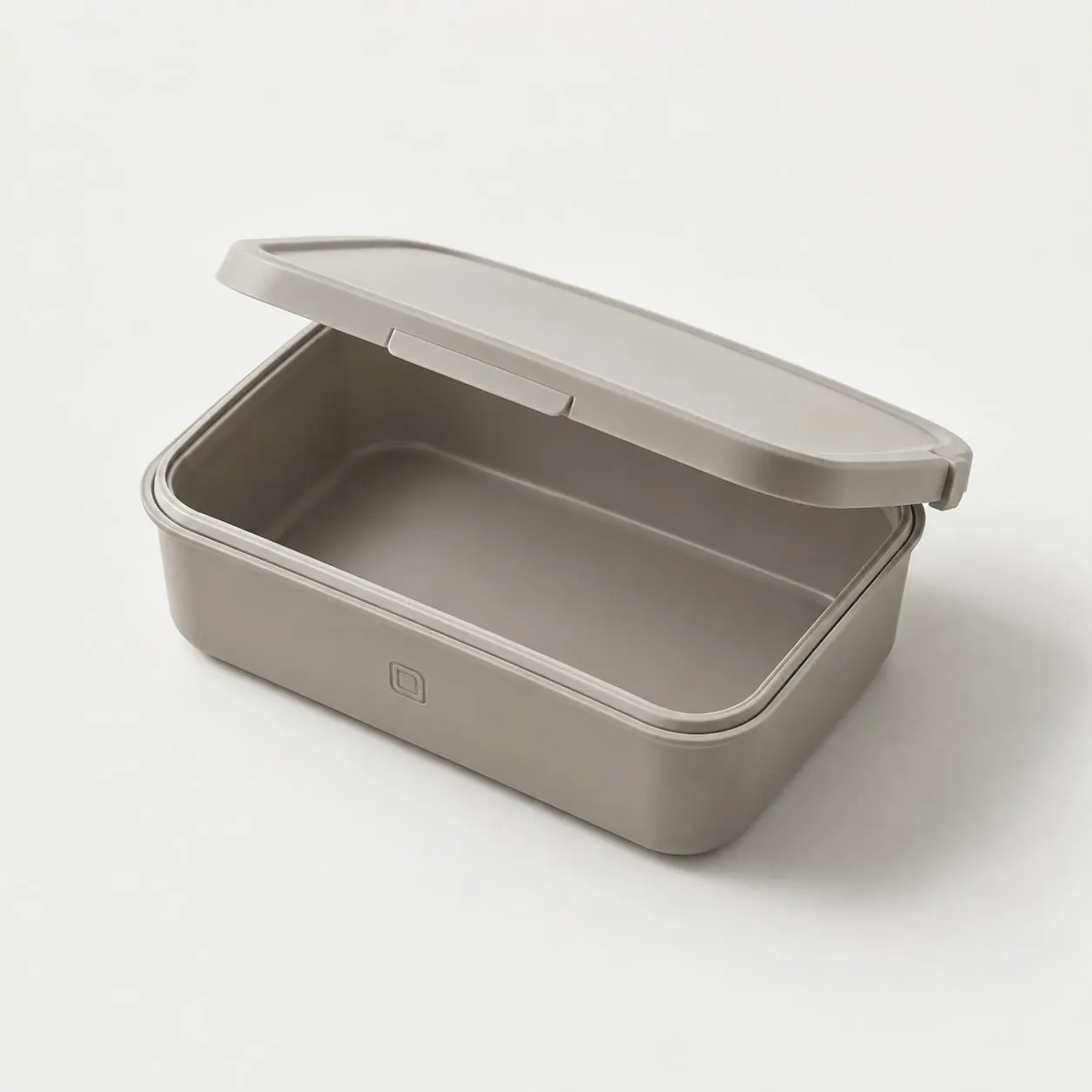
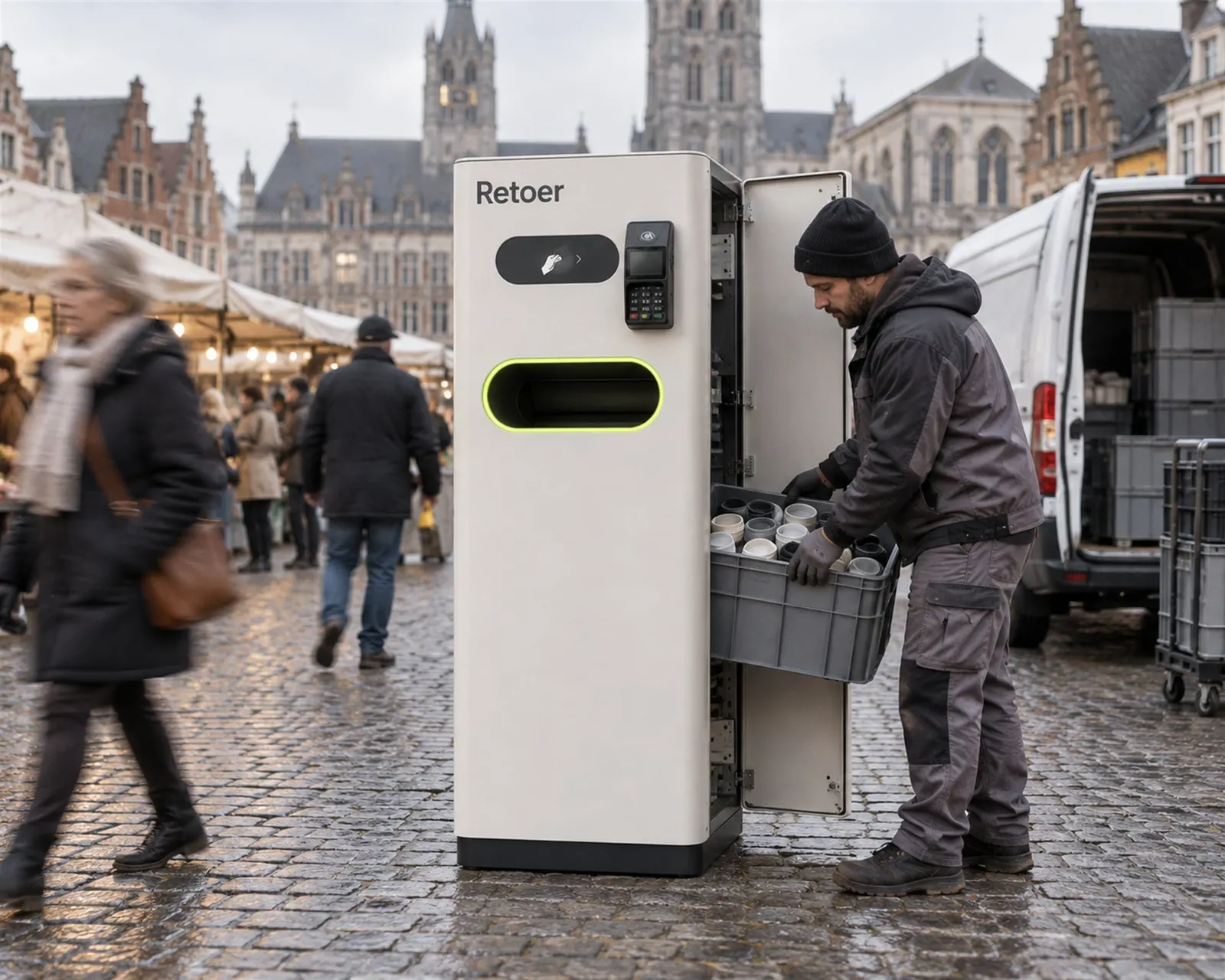
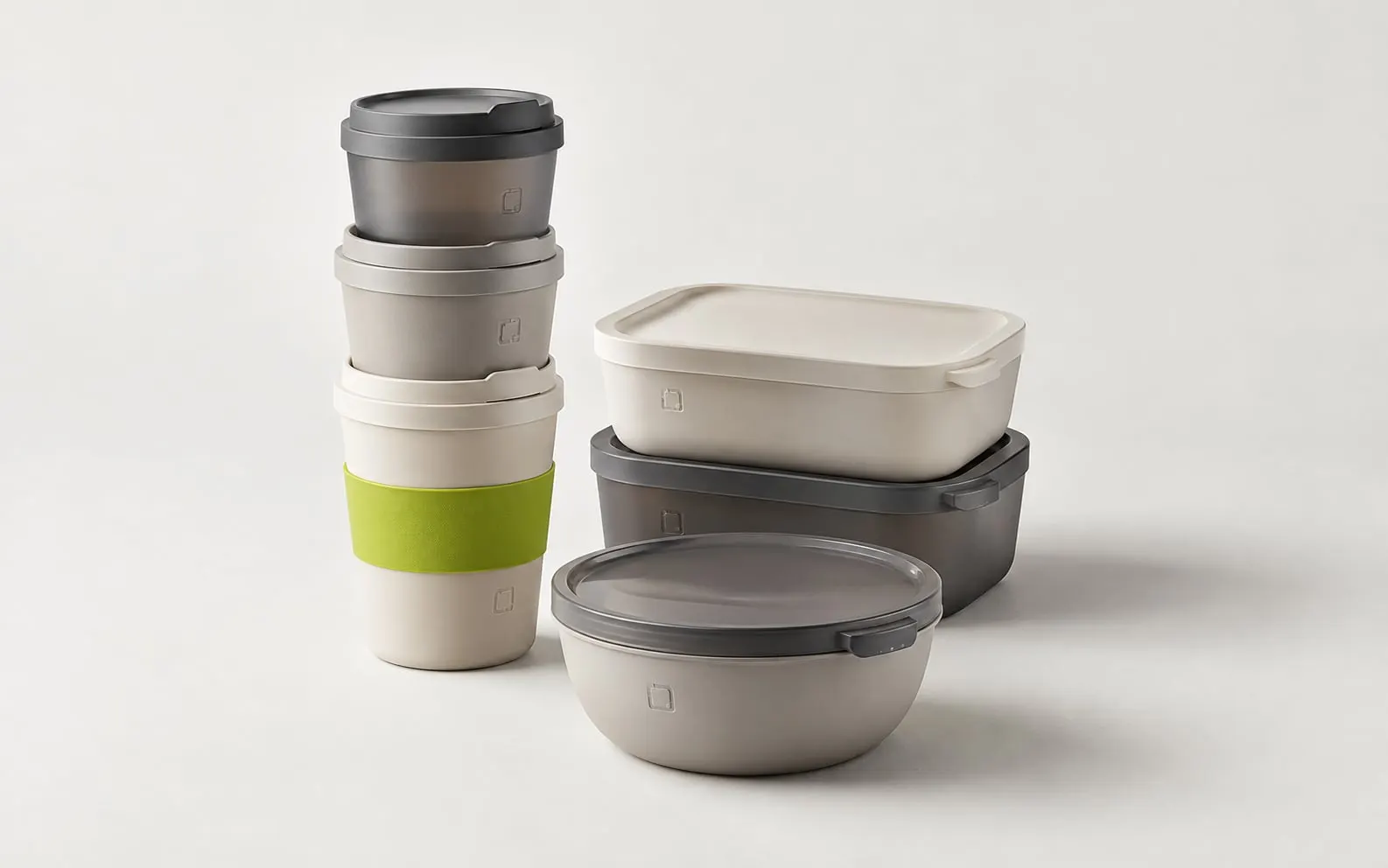
In Retoer, the deposits stay where they are. The packaging pool, the data, and the deposits sit legally with a neutral administrator, outside any operator. If one operator stops, the return points, the containers, and the deposit records stay in the system, so consumers can still return their containers and businesses keep using the same pool.
How Retoer keeps operators and the system apart
Retoer has four layers: governance, an open standard, a digital platform, and a physical chain of return points, washing, and logistics. Neutrality sits in the governance layer. A neutral administrator manages the standard, the packaging pool, the data, and the deposits, and sets clear rules for joining.
The network is open and non-exclusive. Any operator, producer, washing partner, or city can join under the same rules. Operators compete on service, meaning washing, logistics, and customer experience. The standard is shared, and no operator can turn it into a competitive asset.
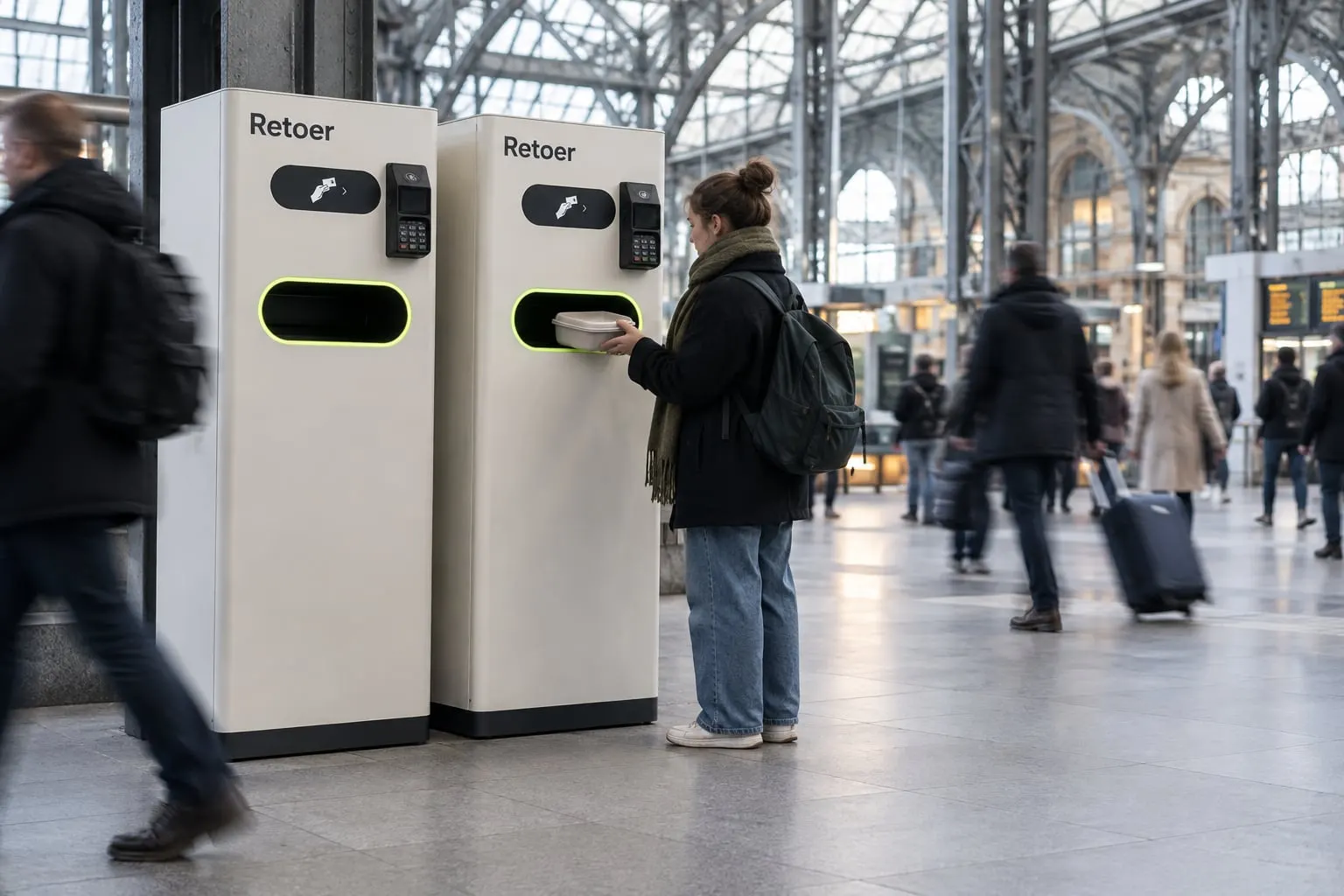
The digital platform keeps a deposit ledger that clears deposits between parties. A consumer can return a container at any Retoer return point, whoever issued it, and the money moves between the parties behind the scenes. Because the ledger belongs to the system, an operator leaving does not take it along.
The same rule applies to Retoer itself. Rotion builds and incubates the infrastructure, and it doesn’t keep permanent control of the network. Other providers can join on the same terms. Over time, a neutral body takes over oversight of the standard and of participation. The system is designed to outlive any single operator, including its initiator.
What this means for reuse initiatives
If you already run a reuse scheme, you keep your brand and your customers. You plug into shared return points, washing, and logistics through the open API. Your containers circulate in a pool that doesn’t depend on any one company staying in business, yours included. For the restaurants you sign up, that lowers the risk of saying yes. Read more on the page for reuse initiatives.
What this means for cities
A city that backs a reuse scheme takes on part of its risk. When a neutral administrator holds the pool and the deposits, the city backs one system instead of a patchwork of initiatives, and return points become public infrastructure, comparable to public waste bins. If an operator leaves, the return points stay in the network. Retoer tests the system in municipalities of different sizes and in high-traffic zones. See what Retoer offers cities and municipalities.
Take part
If you run a reuse initiative or work for a city and want to know how your containers or return points would fit under a neutral administrator, see how to take part in Retoer.